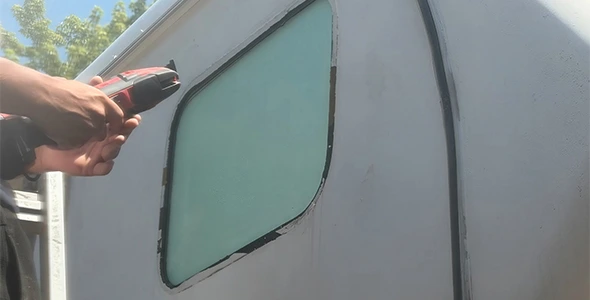
RV front windshield glass is large, heavy, and often specific to the make and model of the coach. A crack that spreads across the driver’s view, damage along the edge of the glass, or a windshield that leaks around its seal usually means replacement rather than repair. Many RV windshields come in one or two pieces, and the glass often has to be ordered for your exact model.
Our RV windshield replacement and installation in Highland, NY starts with confirming the correct glass for your RV. We remove the damaged windshield, clean and prepare the opening, and set the new glass in a rubber gasket or with urethane adhesive, depending on how your coach was built. Before you leave, we water-test the seal and make sure the glass sits evenly in the frame.
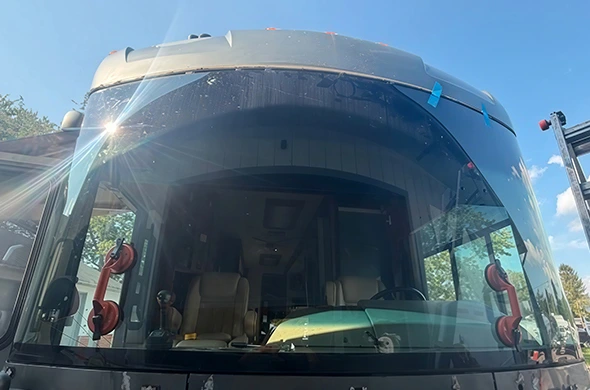
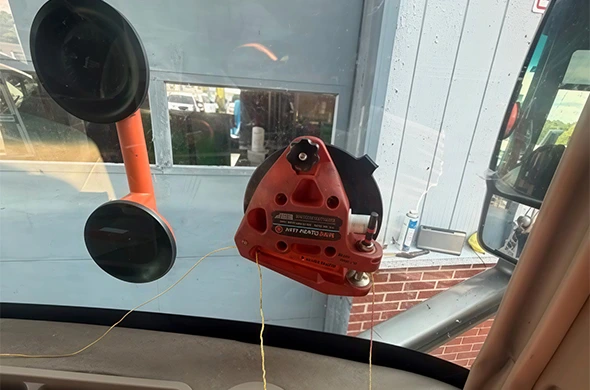
Clear glass and tight seals matter for safe driving and for keeping water out of the RV.
Clear Visibility: A windshield without cracks or chips helps you spot hazards, especially at night and in the rain.
Proper Seals: We set and seal every windshield and window so water stays out of the walls and floor.
Correct-Fit Glass: We source glass made for your RV’s make and model, including tinted glass when it’s available.
Repair When Possible: If a chip or crack can be repaired, we tell you before recommending a replacement.
Every glass job starts with a close look at the damage and ends with a water test.
We check the size and location of the chip or crack, the condition of the seal, and the frame around the glass.
We explain whether a repair will hold or a replacement is needed, and we order the correct glass if required.
We remove the damaged glass, prepare the opening, and set the new glass with the right gasket or adhesive.
We test the seal with water and check the fit and visibility before you pick up the RV.
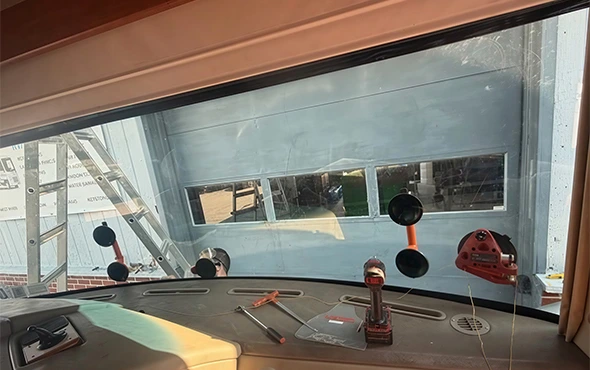
Not every chip or crack needs a new windshield. Small chips and short cracks, especially outside the driver’s direct line of sight, can often be repaired with a resin that fills the damage. Repairing early matters, because road vibration and temperature swings can turn a small chip into a long crack.
Our RV windshield repair starts with an assessment of the damage. If it’s a good candidate, we clean the chip, fill it, and cure the resin so the damage is less visible and less likely to spread. This kind of RV glass repair works best when the damage is caught early. If the damage is too large, too deep, or right in the driver’s view, we will tell you that replacement is the safer choice.
RV side window glass and RV rear window glass are usually set in aluminum frames as single-pane or dual-pane units. Over time, the sealant behind the frame dries out and lets water into the wall. Dual-pane glass can fog when its seal fails, and glass can crack from road debris or a frame that flexes on rough roads.
RV sliding windows add more parts that wear out. Tracks fill with dirt, latches break, and weep holes clog, so water collects in the track instead of draining out. We clean and repair tracks and latches, clear the drainage, replace broken glass, and reseal frames so the window opens smoothly and keeps water out.
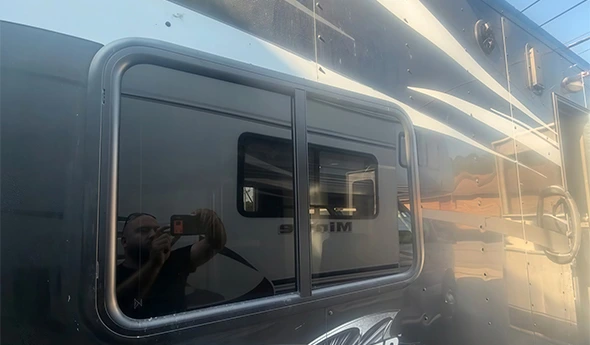
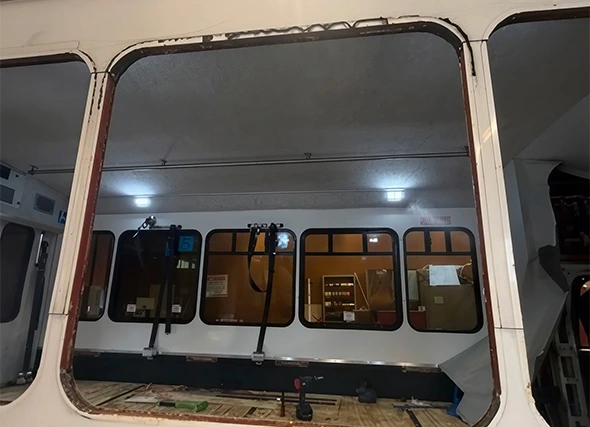
When a window frame is bent, the glass is badly damaged, or a dual-pane unit has fogged, RV window replacement is often the most practical fix. In other cases, RV window repair, such as resealing the frame or replacing just the glass, solves the problem at a lower cost. We look at the window, the frame, and the wall around it before recommending either option.
Leaking windows are one of the most common sources of hidden water damage in RVs. If we find soft or stained wall panels around a window, we check how far the moisture has spread before resealing or completing an RV glass replacement. SealTech testing can then confirm the leak is fixed. For larger leak damage, see our RV Water Damage & Mold Removal page.
Many RVs come with tinted glass to cut glare, keep the interior cooler, and add privacy. When a tinted window or windshield is replaced, the new glass should match the windows around it so the RV looks consistent and the interior stays shaded.
We replace RV tinted windows with glass that matches the original tint whenever it is available. Keep in mind that tint rules for windshields and front side windows vary by state, so the darkest tints are not always allowed up front.