SealTech is a pressure test designed to find leaks in RVs. With the RV closed up, the equipment slightly pressurizes the interior with air. A technician then sprays a soapy solution along the exterior seams, windows, vents, and fixtures. Wherever air escapes, bubbles form, showing exactly where water can get in.
This kind of RV leak testing finds leaks a visual check can miss, including small gaps that only leak in heavy rain or at highway speed. Each RV water leak inspection also includes a look at the roof, seals, and interior, plus moisture readings in areas with stains or soft spots. That way, we know both where water gets in and how far it has traveled.
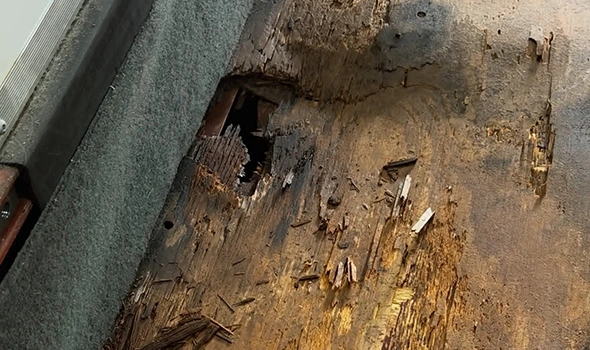
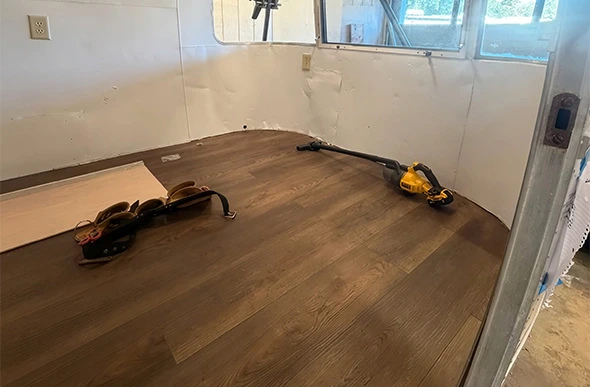
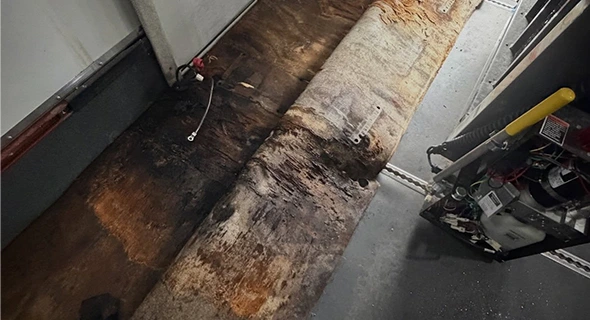
Finding the exact leak point saves money and keeps the same leak from coming back.
The Source, Not Just the Stain: Water often travels before it shows, so we find where it enters, not just where it drips.
Targeted Repairs: Testing shows which seams actually leak, so we reseal what needs it instead of coating the whole roof.
Leaks Caught Early: Testing can reveal small leaks before they cause soft floors, rot, or mold.
Proof the Fix Worked: We retest after repairs to confirm the leak points are sealed.
Leak detection works best step by step, from what you’ve noticed to a final retest.
We ask where and when you’ve seen water, then inspect the roof, seams, windows, slides, and interior.
Moisture meter readings in the walls and floor show how far water has spread from the leak.
We pressurize the RV, spray a soapy solution on the exterior, and mark every spot where bubbles appear.
We seal the marked leak points and test again to confirm they hold.
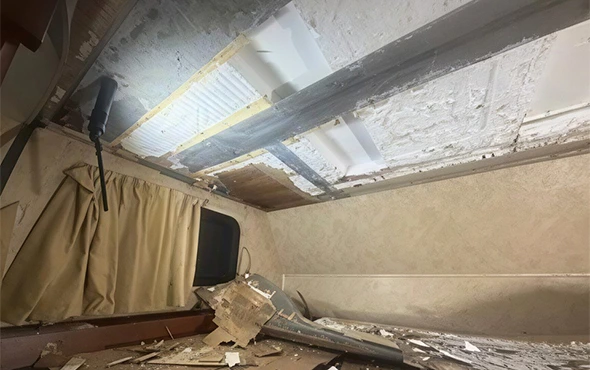
The roof is where many RV leaks start. Sealant around vents, skylights, the AC unit, antennas, solar wiring entry points, and the front and rear caps dries out and cracks over time, and roof membranes can tear from branches or debris. Because water runs along the roof decking before dripping through, a ceiling stain is often some distance from the actual leak.
Our roof leak detection combines a close inspection of every seam and fixture with SealTech testing, which reveals leaks along the roof edges and caps that are hard to spot by eye. Once we find the leak points, we mark them for repair and check the decking underneath for soft or rotted areas.
Slide-outs are one of the trickiest places to find a leak. The room moves in and out, its seals press differently in each position, and water can pool on the slide roof and run inside when the room retracts. These leaks often show up as wet carpet along the slide, stains below the slide opening, or a musty smell near the room.
We test slide-outs in both the extended and retracted positions, since a seal can hold in one and leak in the other. Slide-out leak detection also covers the wiper and bulb seals, the corners of the slide box, the slide roof, and whether the room sits square in its opening, because a slide that is out of alignment can leave gaps. Worn seals and alignment problems are then repaired through our slide-out service.
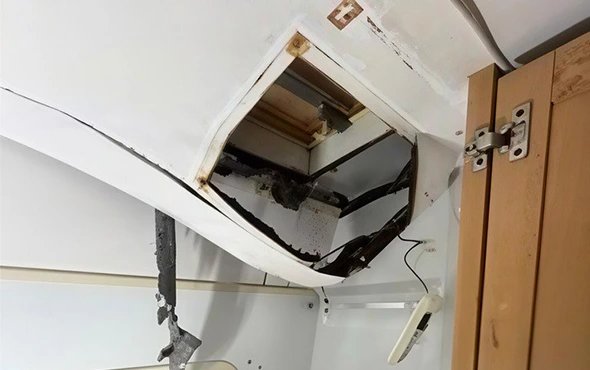
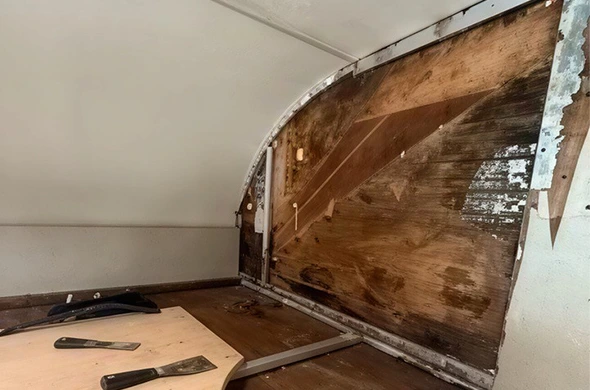
Some leaks only appear under certain conditions, which makes them hard to pin down. A leak that only shows up while driving in the rain often points to the front cap, windshield, or clearance lights. One that appears only during storms from one direction usually comes from that side of the RV. A wet spot that shows up when it hasn’t rained at all is likely a plumbing leak, not a roof or window leak.
Good RV leak troubleshooting starts with these clues. Tell us when and where you’ve seen water, what the weather was, and whether the RV was parked or moving, and we’ll use that to decide where to test first. Plumbing leaks are traced separately by pressure-testing the water lines and checking the fittings under sinks, around the shower, and at the water heater.
Finding the leak is only half the job. RV water leak repair depends on the source: resealing roof fixtures and seams, replacing the butyl tape behind window and door frames, patching a torn roof membrane, replacing slide seals, or fixing a plumbing fitting. We use sealants that suit your roof material, since the wrong product can fail quickly or damage the roof.
After repairs, we run the SealTech test again to confirm the marked leak points are sealed. If water has already damaged the walls, floor, or insulation, we handle the restoration as well. For more on that work, see our RV Water Damage & Mold Removal page.